Artificial intelligence is one of the most rapidly growing technologies with a lot of promise. Driven by big data and advancements in computing power and algorithms it has huge potential to uncover new societal and environmental values.
The Master of Information Technology (Artificial Intelligence) aims to develop socially responsible and technically competent AI specialists, to help current and future industries across different sectors. This course is designed for current Information and Communication Technology (ICT) professionals with a bachelor’s degree in information technology or computer science who wish to gain advanced technical skills and expertise for the challenges of rapidly advancing ICT technologies, especially artificial intelligence.
The Master of Information Technology (Artificial Intelligence) will provide students with transferable skills, industry experience and in-depth knowledge of business practices, positioning them for potential careers such as the following:
Students wishing to gain entry into the Master of Information Technology (Artificial Intelligence) at ASA Institute of Higher Education must meet at least one of the following entry criteria.
Additional Note: Assessment of admission requirements is in accordance with ASA’s Diversity and Equity Policy and Student Admission Policy and Procedure.
Along with the above admissions criteria, international applicants also must demonstrate and meet one of the following minimum English Language Proficiency standards:
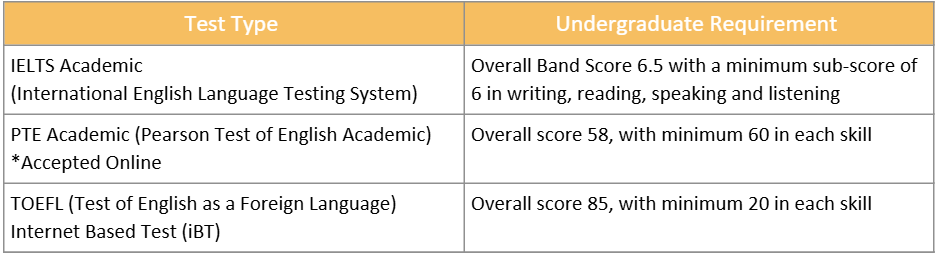
For more information and country specific English exemptions please see Section 8. English Language Requirements of the Student Admission Policy
For more information about our standard admission requirements:
International Students must apply through a qualified Education Agent. For more information visit why we use an agent.
International applicants are only eligible to enroll as full-time students and must be 18 years of age or over at the time that they commence the course for which they have applied.
Any student with prior learning may submit appropriate evidence and apply for Recognition of Prior Learning. ASA may award credit towards achievement of a qualification or award for various forms of prior learning by comparing a student’s current level of skills and knowledge against unit learning outcomes.
ASA may, at its discretion, recognise the validity of other forms of training or education, providing they are deemed equivalent to, or meet, the AQF standards. For further information please review the Recognition to Prior Learning Policy.
ASA Tuition fees are charged on a 'per unit of study' basis. The number of units of study are specified within the Letter of Offer provided to each student*.
Students must pay their fees for each study period in advance and in accordance with their LoO which provides admission to the course. The LoO indicates all due dates for fee payments during the course enrolment.
*If you have/plan to apply for Recognition of Prior Learning, the total number of units of study is subject to change.
Other Costs
All other fees associated with studying at ASA are non-tuition fee related and will only be charged dependent on the individual student circumstances, these include but are not limited to:
The Master of Information Technology (Artificial Intelligence) comprises fifteen (15) units of core, specialism and electives over 400, 500 and 600 levels to meet the requirements with the Australian Qualifications Framework (Level 9), and Higher Educations Standards Framework.
The course commences with three (3) core units and one (1) specialism at level 400. Within the 500 Level there is one (1) core unit, two (2) specialism units and one (1) elective. At the final level 600, there are two (2) core units, three (3) specialism units, one (1) elective and one (1) Work Integrated Learning/Capstone unit worth 20 credit points.
BUS400 Emotional Intelligence, Leadership and Communication
MIT400 Principles of Programming and Database Management Systems
MIT401 Contemporary Digital Ecosystems
MAI400 Artificial Intelligence Fundamentals
MIT500 Language Bots
MBA500 Big Data & Cloud Computing Fundamentals
MAI500 Emerging Topics in Artificial Intelligence
(1x 500 level Elective Unit)
MIT600 Management Information and Enterprise Systems
MAI600 Advanced Machine and Deep Learning
MIT601 Digital Data Governance
MAI601 Rights, Responsibilities and Artificial Intelligence
MAI602 Advanced Topics in Artificial Intelligence
MIT602 MIT Capstone
WIL602 MIT Work Integrated Learning
(1x 600 level Elective Unit)
MIT501 Network Infrastructure
MIT503 Problem Solving in the Digital
MCS501 Human Factors and Cyber Criminal Behaviour
MBA502 Digital Transformation Strategies
MCS600 Australian Cyber Law and Digital Evidence
MIT603 Information Security
MIT604 Business Practice for IT Professionals
MIT606 Critical Infrastructure and Control System Security
MIT608 Consultancy and Engaging with Stakeholders
MIT609 Enterprise Security